One of my favourite podcasts is called the Mystery Show. In each episode, Starlee Kine attempts to solve a mystery where the answer can’t be found online (check out the belt buckle episode!). The show only lasted six episodes due to the ridiculous amounts of money this type of sleuthing involved.
For me – George Thomas – is my mystery, and as such, what you’re reading is my own budget Mystery Show. Just who was George Thomas? And what on earth happened to him?
The Internet comes up short. No artist profiles, no PR pieces, no interviews, no social media, not even a lonely Reddit thread – all the search engines throw up is a Brighton gig review written by me, a Piccadilly Records album listing (top Manchester record shop), and a scattering of album reviews on pleasingly archaic indie blogs.
Streaming platforms return tumbleweed GIFs and ghost playlists. YouTube only manages videos of actual owls – see Funny Owl Intrigued by Stuffed Rat. A.I gathers crumbs, hallucinates a crust of a musical career.
So, what then do I know of George Thomas?
Well, George lived in and around Manchester in the 2000s, same as me, and released three albums Concert for Two Bicycles (2007), Shooting Cabin Songs (2008) and Laughing at the Raging Sea (2010) on Red Deer Club – a curator of top-notch folk gigs and occasional record label. Oh, and George almost certainly worked as a tree surgeon.
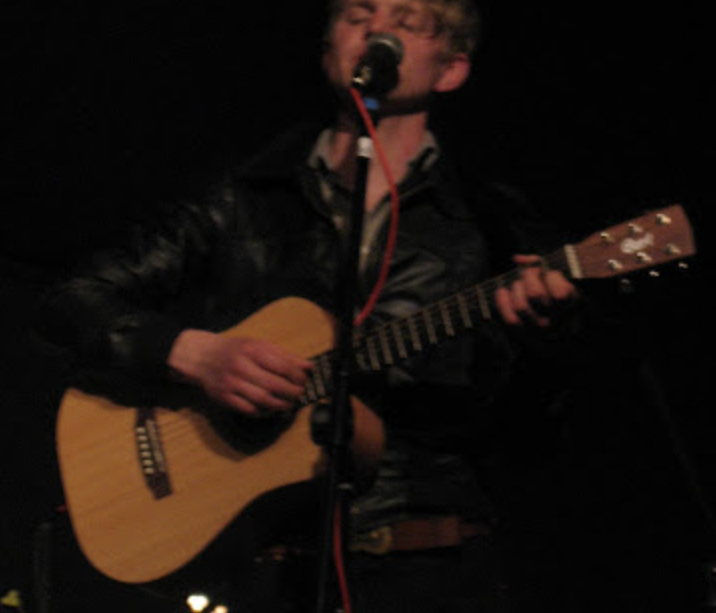
I can also tell you that he was one of the strangest, funniest and most compelling live performers I’ve ever seen. I first came across George playing solo as support for Viking Moses at a gig in Hulme. Within the space of two songs and some awkward mumbling, I knew that I would go and see this man play whenever I had the chance. And there you have it, the sum total of my George Thomas knowledge, which leaves me, two decades later, wondering how do I find out more?
Red Deer Club seems like a good place to start my investigation. Having relocated to Colne Valley, West Yorkshire, Red Deer Club has been enjoying a recent resurgence. It’s therefore easy enough to track down its founder Duncan Sime and drop him a message on Instagram. Duncan remains as lovely and open as I remember, and is willing to help. He tells me that he hasn’t spoken to George in over a decade, but that he will do his best to contact him. Duncan also confirms that George is, without doubt, an enigma.
Duncan recalls stumbling across George at an open mic night at The Whitworth pub in Rusholme and finding his storytelling “truly addictive and mesmerising”. And he was funny to boot. Duncan went back week after week to watch him perform and this led to three albums, multiple gigs and shed-loads of still unreleased material, including an album recorded at 4a.m in a wood. It seems that George cast a similar spell on Duncan as he did me.
As I await further news, I decide to reacquaint myself with Shooting Cabin Songs.
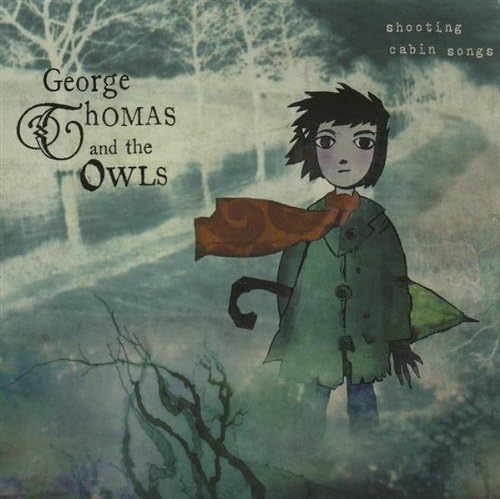
The moment I hit play on the CD player, I’m back in George’s world, roaming desolate moors in the depths of a frigid winter. Opener Ballad of a Forgotten Hero begins:
“So, I’m back my friends
I’m back from the edge of the world
With holes in my chest
And these two wooden legs
I’m back from the edge of the world”
What a way to start your second album! It instantly sets the tone for what’s to follow, demonstrating George’s ability to juxtapose darkness and humour in compelling ways. From its breathy swell to the gorgeous melancholic falsetto of album closer Falling Snow, the atmosphere of Shooting Cabin Songs is immersive, evocative and deeply engaging.
Home-recorded on a reel-to-reel eight-track, the sound is decidedly lo-fi. Many of the album’s ten songs are barely-there pencil sketches, the graphite unsure whether to break away from the lead to darken the white of the paper.
Chris Long in his review of George’s debut Concert for Two Bicycles, eloquently sums it up: “[the songs] don’t so much ring out as drift away into the ether, offering no insistence to be heard and happily settling for the mere possibility of it.”
The songwriting is relatively simple, rambling around various folk modes. There’s the more traditional The Nine Gardens of Aberglasney to the acid folk of Mountaintop Blues, recalling the Fugs and Holy Modal Rounders. You can hear elements of Devendra Banhart’s New Weird America, but this is always more Bloody Odd England. To my ears, George sounds more like a very British and acoustic take on sixties Japanese psyche band Les Rallizes Dénudés. But like I said, nothing sounds quite like George.
To fit in with the bleak rural mood, the musical backdrop conjured by George and his Owls recalls an ancient piece of abandoned farm machinery – all rusted cogs and sharp teeth, gnarly bolts and gnashing blades. With a shove and a kick or a lubricating melody or key change, the machine shudders into life – magical, shambolic, and catastrophic to misplaced limbs.
It is George’s voice and lyrics that captivate me. In the twenty-odd years since first hearing him sing, I’ve never come across anything quite like it. He exists as the antithesis of Mariah Carey, having at his disposal an array of vocal tricks that he employs with off-kilter mastery. There is the glacial slowness of the delivery, the deliberate missing of notes, and a cobwebby whisper that will cling stubbornly to a dim corner of your mind.
I check Instagram. Nothing from Duncan. I watch Funny Owl Intrigued by Stuffed Rat, again. George remains a mystery. I get up and press play on the CD player.
There are three tracks on Shooting Cabin Songs that ably demonstrate the unique charms of George Thomas.
Smack is devastating and hilarious. George’s vocal is at its slowest, each syllable sounding like it’s being dragged reluctantly from somewhere dark and constricted. The lyrics dance a line between the bleak and optimistic, and it features the most beautiful melodic chorus:
“The green tree grows so low outside the window
That I’ve not seen the sun in seven years
Now the only way to bring some light into my life
Is to get me a little more smack”
The tree surgeons are summoned to save the day. Swinging around the tree like “some suicide monkey circus”, they execute tidy cuts and achieve a pleasing shape to the tree. Sunlight comes flooding in and there is hope, albeit fleeting.
Tree surgery is a recurrent theme in George’s work. On the delightful uptempo ramble of The Art of Chainsaw Maintenance, George plays a charming melodica and imparts the following sage advice:
“Now, if there was one piece of advice that I could give you, it would be this:
Look after your tools, they’ll cost a small fortune
To buy some more”
George provides a unique perspective on the world, both absurd and mundane. It allows the listener to experience things differently, landing on a truth in the most unsuspecting ways.
Song for a Witch is a love song that sees George conjure up a series of vivid vignettes with wonderful turns of phrase. The object of desire is a suspected witch that’s been seen “Doing the twist on Uncle Fredrick’s tomb” and using her dark magic to unsettle the rural community:
“Disturbing all the cattle in the quiet of the valley
There hasn’t been a drop of milk for twenty-seven days
And the dogs are barking at the shadows crossing the moon”
“The golden girl has been stealing from her mother’s purse”
It’s a far more jaunty affair and musically more textured too. The gypsy jazz mandolin licks on the last verses are surprising in the best way.
A few days later and Duncan messages. He has George’s email address along with his blessing for me to get in touch. This is all a little too easy. No Mankunean road trip, no waterboarding tight-lipped folkies or going undercover at a tree surgeon convention.
After two decades in the dark, I’m not going to wonder any longer. I email George.
I gush a little, tell him how much I’ve enjoyed his music over the years and explain the premise of Lunchtime For The Wild Youth. I try not to let on just how curious I am to know what he’s been up to.
And then a couple of hours later, I have an email in my inbox from the man himself. A twenty-year itch is about to be scratched, the mystery will be solved.
We exchange a few messages and George fills me in, happy to help, warm and funny.
After leaving Manchester in 2010, George moved to Glasgow. Revelling in the city’s diverse music scene, he expanded his listening, embraced new genres and drifted away from the folk scene. He started to see his past work as “a bit passe” and wanted to strive for something different.
This resulted in George making a “vaguely psychedelic indie album” in 2014 with his brother, Evan, under the moniker Insect Heroes. Apocalypso was released on Lost Map but didn’t do too much – I, for one, missed it altogether. There was also a shelved 2016 album, which he describes as “fairly ridiculous” and “very tasteless.”
I am simultaneously delighted to learn that there is more George Thomas music out there and sad that the outsider folk artist of my mind is a mere mortal musician, free to flit between genres.
I ask George about his approach to songwriting in the Red Deer years. He explains that his aim was to: “write something that nobody else would have written […]exploring ideas that wouldn’t usually get put in songs.”
George found his music through the Beta Band, the Fence Collective and many of the acts that culminated with the first Green Man festival. In particular, it was the seemingly shambolic nature of shows by King Creosote and Lone Pigeon that encouraged George to start writing and performing his songs: “It was an inspiration to feel like being engaging was more important than being polished.”
Remembering the funny-awkward stage presence, the idiosyncratic storytelling, the confused audiences, but my own and others’ captivation and infatuation, I ask George about performing live back then.
“Standing on a stage is absolutely not natural to me,” he explains. “I was very aware when I started that I would soon become too self-conscious to continue at some point, so I felt like I should take advantage of the moment and write fast.”
It turns out the first time I saw George was only his second ever live show, the previous being the night before. His decision to fill in at the last minute immediately began a tour with Brendon Massei aka Viking Moses and sparked a friendship that remains to this day.
I ask George about what he wanted to achieve with Shooting Cabin Songs. He explains that it was an “attempt to make something more coherent and slightly serious, at least within the boundaries of [his] ability.” The sound George was aiming for was inspired by Lone Pigeon releases and how their “half done lo-fi nature left you to fill in the gaps in your imagination.” George has maintained this interest in the recording process, regularly helping friends with their projects.
After a nine-year stint living in a cabin in the middle of nowhere, George is back in Glasgow. He stills works as a tree surgeon, listens to Frank Ocean and Cindy Lee, and occasionally teaches gardening. Perfect.
More importantly, George is still writing songs and even considering putting a live show together, just him and his guitar again. The Internet is a shitshow. Mystery solved.
Links and further reading:
- This article was originally published in March in the zine: Lunchtime for Wild Youth. Go buy issues.
- Read my original gig review of George in Brighton.
- Visit the website for all things Red Deer Club.